
TL;DR:
- Music premieres turn a music release into a cultural event that generates buzz and engagement.
- They leverage structured anticipation, live events, and mystery to build momentum and long-term visibility.
A music premiere is a planned public launch designed to concentrate attention, press coverage, and fan energy into a single cultural moment. Unlike a quiet upload to a streaming platform, a premiere transforms a release into an event. The mechanics behind why music premieres create buzz are psychological, algorithmic, and social all at once. Structured anticipation turns passive listeners into active participants. Coordinated timing forces press, fans, and creators to converge simultaneously. For artists like Morgan Harris, who builds his releases around emotional storytelling and dance-pop energy, understanding these dynamics is the difference between a song that lands and one that drifts.
Why music premieres create buzz through structured anticipation
Structured multi-week countdowns before a premiere increase psychological investment, making the act of listening feel almost inevitable by release day. The mechanism is straightforward: when fans receive consistent signals over time, they begin to feel ownership over the release before it exists. That sense of investment converts casual curiosity into committed day-one streaming behavior.
The gap between expectation and fulfillment is the engine of premiere buzz. A spontaneous announcement gives an audience no time to build anticipation. A structured rollout, by contrast, creates a series of small emotional commitments: a snippet here, a visual teaser there, a cryptic lyric posted on a Tuesday. Each piece asks the audience to lean in slightly further. By the time the music drops, the crowd is already gathered.
Pre-release strategies outperform spontaneous announcements precisely because they turn passive consumption into active participation. Fans who engage with teasers share them, debate them, and bring others into the conversation. That organic spread is something no single-day announcement can replicate.
- Release a 15-second audio snippet 3 weeks before the premiere date
- Drop a visual teaser or lyric card 2 weeks out to shift the conversation
- Announce the premiere date and format 1 week before to create urgency
- Use the final 48 hours for countdown posts that invite fan responses
Pro Tip: Time your teaser content for tuesday through thursday releases. Engagement on social platforms peaks mid-week, and a well-timed teaser can carry momentum through the weekend and into premiere week.
How live premiere events build community and social proof
Live premiere events combine broadcast scale with community-driven interactivity, and that combination produces engagement numbers that scattered releases cannot match. The Bruno Mars The Romantic launch generated over 3 billion impressions across broadcast and social channels, with 36 million likes within the first hour on TikTok LIVE. That figure is not just a vanity metric. It signals that a premiere, when executed with coordinated platform partnerships, can function as a cultural event rather than a content drop.
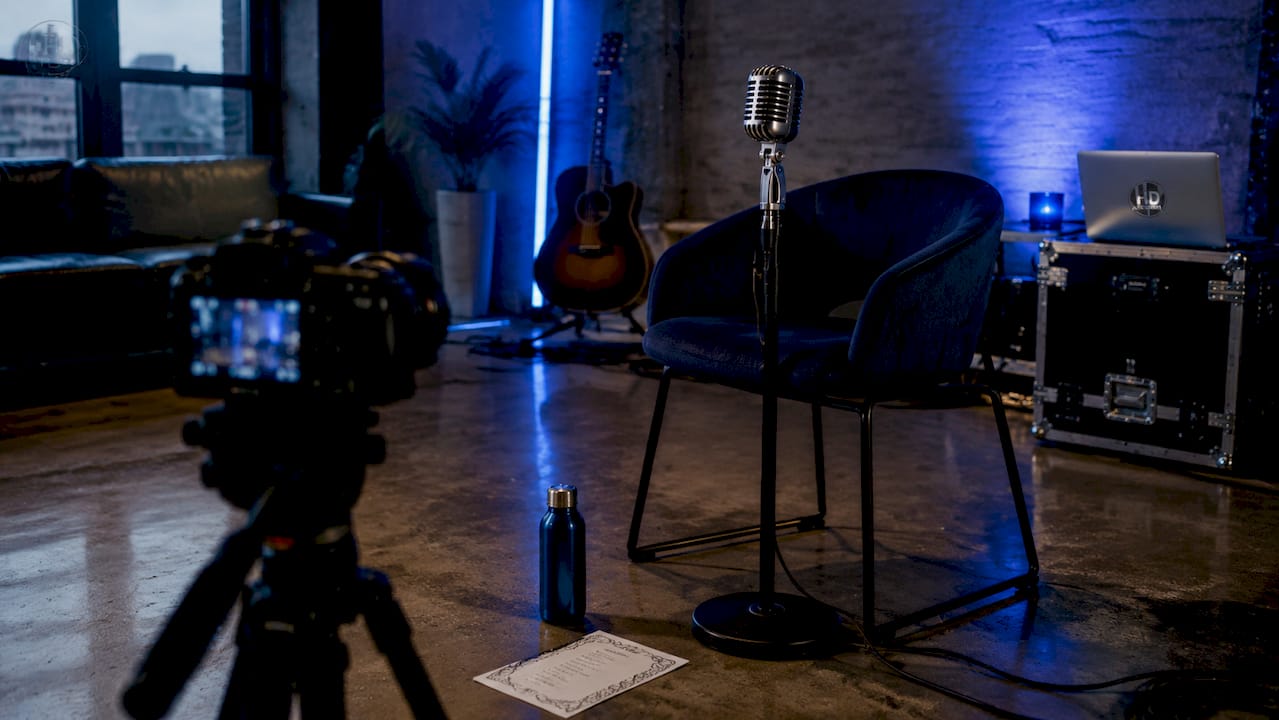
The social proof generated during a live premiere is self-reinforcing. When fans see thousands of others reacting in real time, their own emotional response intensifies. Parasocial relationships deepen when fans feel like insiders in the creative process rather than passive consumers watching from a distance. That shift from observer to participant is what separates a premiere from a standard release.
For independent artists, the scale of a Bruno Mars campaign is not the point. The principle transfers at any budget. A TikTok LIVE premiere with a few thousand concurrent viewers still creates a shared moment. It still generates comments, clips, and conversations that extend the song’s reach beyond the live window.
- Host a premiere LIVE stream with a short Q&A before the song plays
- Encourage fans to post their real-time reactions using a dedicated hashtag
- Pin fan comments and repost clips during the premiere to signal community
- Archive the premiere video immediately so late arrivals can experience it
Pro Tip: Prepare 3 to 5 conversation prompts before going live. Dead air kills momentum. Asking fans “what lyric do you think this song starts with?” keeps the chat active and builds investment before the first note plays.
How premieres trigger streaming algorithms and viral mechanics
84% of Billboard Global 200 songs achieved viral status on TikTok before charting, which means the premiere period is not just promotional theater. It is the window where algorithmic fate is largely decided. Streaming platforms and social media algorithms treat concentrated engagement as a trust signal. A song that receives a surge of saves, shares, and listens within a short window gets pushed to discovery playlists and recommendation feeds. A song that trickles in slowly does not.
Pre-saves and early hashtag seeding function as algorithm primers. When fans pre-save a track before its premiere, the platform registers intent. When a hashtag tied to the release accumulates posts before the song is available, the algorithm reads that as demand. Both behaviors tell the platform that this release deserves attention before it has even played once.
| Premiere tactic | Algorithmic effect | Timing |
|---|---|---|
| Pre-save campaign | Signals demand to streaming platforms | 2–4 weeks before release |
| Hashtag seeding | Builds social search visibility | 1–3 weeks before release |
| Live premiere event | Generates concentrated engagement spike | Release day |
| Post-release sustain | Feeds discovery algorithm phases | Weeks 1–6 after release |
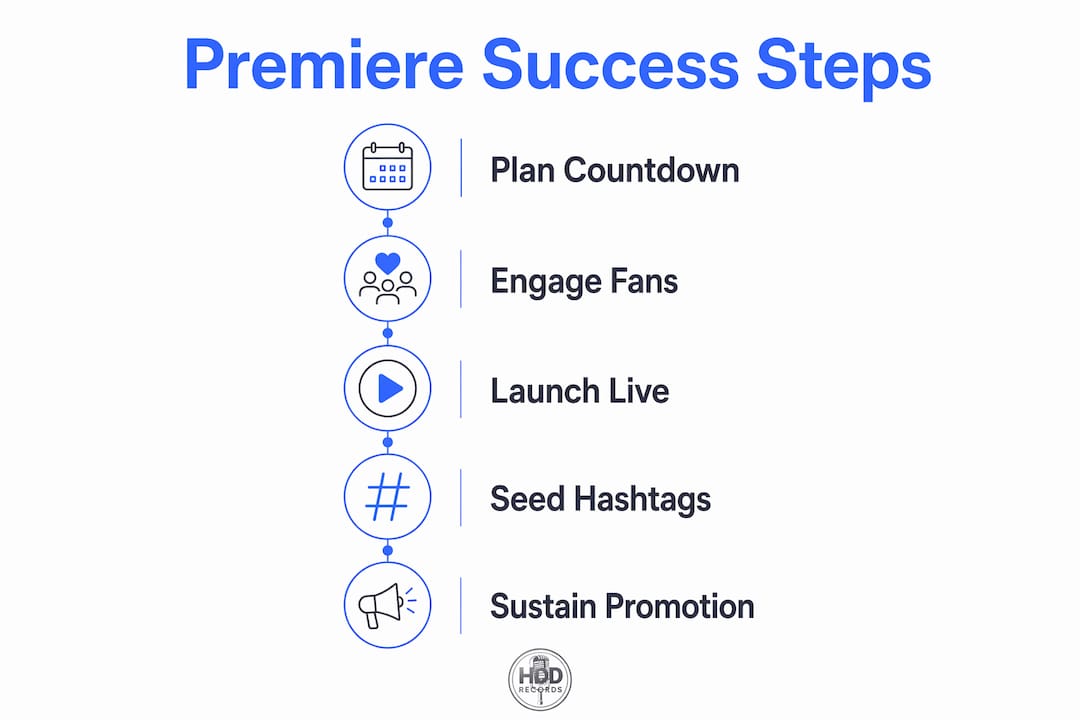
The post-release window matters as much as the premiere itself. Campaigns that sustain promotion for 3–6 weeks post-release capture algorithmic discovery phases, ensuring long-term momentum rather than a quick drop-off. Stopping promotion immediately after release wastes the longer-term streaming growth that algorithms are designed to reward.
What role does mystery play in premiere buzz?
Sustained mystery is one of the most effective and underused tools in premiere marketing. Drake’s 2026 Iceman rollout demonstrated this clearly. Rather than releasing music, the campaign drove long-lasting buzz by encouraging fans to act as detectives, fueling theories and memes that kept engagement high for weeks without a single note being publicly available. The album became the most discussed campaign of the year before anyone had heard it.
Mystery works because it activates a different kind of audience participation. Teasers invite fans to consume. Mystery invites them to create. Fan theories, speculation threads, and meme formats generated around an unreleased song function as free, organic marketing that no advertising budget can fully replicate. The audience becomes the promotional engine.
The contrast with one-time drop releases is instructive. A surprise drop generates a spike and then silence. There is no runway for conversation, no period of collective anticipation, and no community ritual around the moment of listening. Mystery-driven premieres, by contrast, create a sustained arc of engagement that peaks at release and then continues as fans process and discuss what they finally heard.
- Seed visual clues or cryptic imagery weeks before announcing the release
- Avoid confirming fan theories directly. Let speculation run
- Use the artist’s own social channels to post fragments that invite interpretation
- Create a named hashtag early so fan conversation is searchable and aggregated
Practical strategies for maximizing premiere impact
The most effective premiere campaigns follow a phased structure rather than a single announcement. A 6 to 8 week rollout gives each phase room to breathe and build on the last. Compressing everything into one week creates noise without depth. Spreading it too thin loses momentum entirely.
- Weeks 1 and 2: Establish the narrative. Post visual and lyrical fragments that hint at the song’s emotional world without revealing the title or release date.
- Week 3: Announce the premiere date and format. This is the moment anticipation crystallizes into a specific event fans can mark on their calendars.
- Weeks 4 and 5: Intensify engagement. Release a snippet, a behind-the-scenes clip, or a lyric visual. Activate pre-saves during this window.
- Premiere week: Execute the live event or coordinated release moment. Coordinate any press coverage or playlist pitching to land simultaneously.
- Weeks 6 through 8: Sustain the release. Post fan reactions, lyric breakdowns, and performance clips to keep the algorithm fed and the conversation alive.
Pre-save campaigns require careful budget thinking. Pre-saves cost 3 times more before release than after, which means artists without large existing fan bases often see better return by concentrating spend on post-release promotion. The premiere event itself generates the organic pre-save behavior that paid campaigns try to manufacture.
Pro Tip: For independent artists, the sustain phase is where most of the algorithmic reward actually lives. Releasing a lyric video or a fan-response compilation in week 3 post-release costs almost nothing and keeps the song active in recommendation feeds.
The most common mistake in premiere campaigns is overposting in the pre-release window and then going quiet after release day. That pattern inverts the actual opportunity. The premiere creates the spark. Sustained promotion after release is what turns a spark into a fire. Artists who learn from high-profile rollouts understand that the release date is not the finish line. It is the starting gun for the discovery phase.
Coordinated premiere tactics now combine multi-format content delivery, including longform editorial pieces alongside short vertical videos for social, with influencer seeding to maximize reach across 2026’s fragmented media ecosystem. The artists who treat these formats as separate efforts miss the compounding effect that comes from coordinating them around a single premiere moment.
Key takeaways
Music premieres create buzz by converting a release into a shared cultural event, and the artists who treat them as such consistently outperform those who do not.
| Point | Details |
|---|---|
| Structured anticipation drives day-one streaming | Multi-week countdowns build psychological investment that converts to concentrated listening on premiere day. |
| Live events generate social proof at scale | Real-time communal experiences deepen fan loyalty and produce engagement spikes that algorithms prioritize. |
| Mystery sustains buzz beyond the premiere | Fan-driven theories and memes keep a release in conversation for weeks without requiring new music. |
| Post-release sustain is where algorithms reward | Promoting for 3–6 weeks after release captures discovery phases that determine long-term streaming performance. |
| Pre-save spend favors artists with existing audiences | Independent artists often see better ROI by concentrating promotional budget on post-release activity. |
The premiere as a cultural contract
The shift I find most significant in how premieres function now is not technical. It is relational. A premiere used to be a release date with a press push attached. What it has become, at its best, is something closer to a cultural contract between an artist and their audience. The artist says: this moment matters. The audience responds by showing up, sharing, and making it matter collectively.
What platforms like TikTok have done is not simply accelerate that process. They have made the audience’s participation visible in real time, which changes the emotional texture of the experience entirely. Watching 36 million likes accumulate in an hour is not just a data point. It is a demonstration of collective investment that feeds back into the event itself, making it feel more significant as it unfolds.
The artists who navigate this well, including independent figures like Morgan Harris who build releases around emotional specificity and personal narrative, understand that authenticity and promotion are not opposites. A premiere works when the music justifies the architecture around it. The campaign creates the conditions for connection. The song has to deliver the connection itself. When both elements are present, the buzz is not manufactured. It is earned.
The risk, and it is a real one, is that the machinery of premiere marketing can become its own distraction. Mystery for its own sake, without a payoff, trains audiences to disengage. Overbuilt campaigns around music that does not resonate leave a residue of skepticism. The most durable premiere buzz comes from artists who discover their audience authentically and then build the premiere around what that audience actually wants to experience together.
— Luca Bennett
Morgan Harris and the art of the music premiere
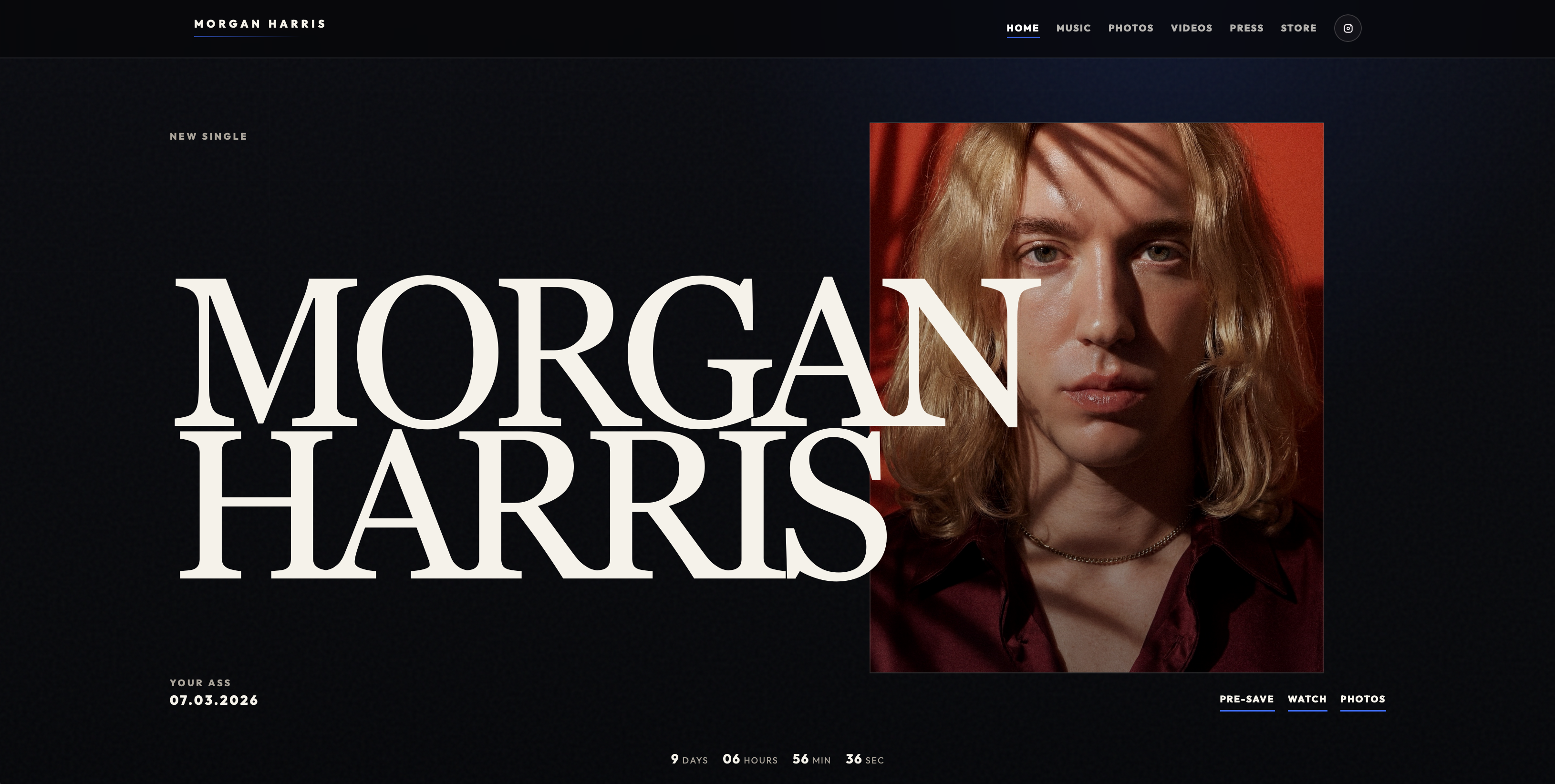
Morgan Harris approaches releases with the same emotional precision that defines his songwriting. His catalog, spanning dance-pop, disco, and house-inflected pop, is built for the kind of communal listening that premieres are designed to create. Tracks like Blues In The Summertime, Pictures Back, and XXI carry the narrative weight and sonic lift that reward the anticipation a well-executed premiere builds. Fans and industry readers curious about how premiere strategy translates into real artist visibility can explore his official artist profile to see how his releases are structured and presented. His full discography offers a clear view of how a growing independent catalog takes shape across multiple release cycles, and his music videos show the visual dimension that makes premiere moments land with lasting impact.
FAQ
Why do music premieres create more buzz than standard releases?
Premieres concentrate press, fan, and algorithmic attention into a single moment, creating social proof and urgency that scattered releases cannot generate. Coordinated timing produces a synchronization effect that amplifies reach far beyond what a quiet upload achieves.
How do premieres affect streaming platform algorithms?
Streaming algorithms treat concentrated engagement as a trust signal, pushing songs with early save and listen spikes into discovery playlists. 84% of Billboard Global 200 songs went viral on TikTok before charting, confirming that premiere-period seeding shapes algorithmic outcomes.
How long should a premiere campaign run?
A 6 to 8 week pre-release rollout followed by a 3 to 6 week post-release sustain phase captures both the premiere spike and the algorithmic discovery window that follows. Stopping promotion at release day wastes the longer-term streaming growth that platforms are built to reward.
Are pre-save campaigns worth the cost for independent artists?
Pre-saves cost significantly more before release than after, making them less efficient for artists without large existing audiences. Independent artists typically see better return by investing in post-release promotion once the music is available to stream and share.
What makes mystery marketing effective for music premieres?
Mystery invites fans to create rather than simply consume, generating theories, memes, and organic conversation that function as free promotional content. Drake’s 2026 Iceman rollout showed that sustained fan speculation can make an unreleased album the most discussed campaign of the year.